Saturday, June 30, 2007


Helios House*, originally uploaded by fdo h.

Helios House, a "green" gas station in Los Angeles (corner of Robertson and Olympic Boulevards) by Office dA, in collaboration with Johnston Marklee and Ogilvy & Mather's Big.

To contribute your Flickr images for consideration, just:

:: Join and add photos to the archidose pool, and/or
:: Tag your photos archidose

Labels:

0 Comments:

Post a Comment

<< Home

Friday, June 29, 2007

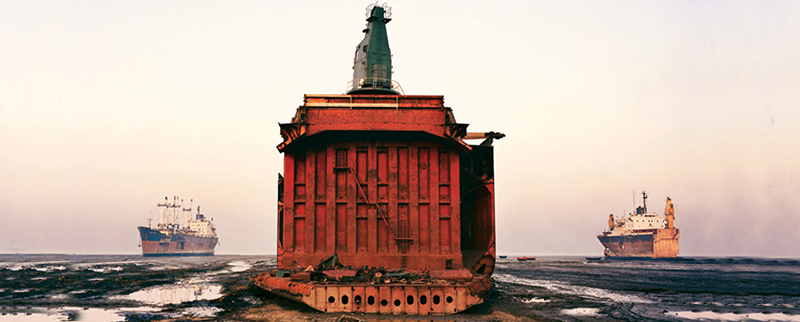
To get out of the heat yesterday I caught a matinee at the Film Forum of Manufactured Landscapes, a feature documentary by Jennifer Baichwal on photographer Edward Burtynsky. With so many pages on the internet about him and his photographs, I'll just give some impressions I had of the movie, hopefully without giving too much away.

burtynsky1.jpg

The film opens with an extremely long pan across the floor of an assembly-line production facility in China, ending in the Burtynsky diptych below.

burtynsky2.jpg
Manufacturing #10A/#10B, Cankun Factory, Xiamen City, 2005

In this first scene, the photographer gives his basic philosophy, namely the inseparability of man and nature and a change in the last 100 years from natural landscapes to industrial or manufactured landscapes, a change that requires a new way of thinking about our surroundings, our actions, and how the two resolve each other.

burtynsky3.jpg
Oil Fields No. 1, Belridge, California 2002

What almost single-handedly makes Burtynsky's photographs so powerful and popular is scale, be it the scale of the photographs themselves (roughly 3x4' in galleries and museums) or the scale of what's presented, be it excavation, garbage, ships, dams, industrial processes, or the oil infrastructure. Filmmaker Baichwal uses this scale to her advantage, many times showing us a detail of one of his photographs and slowly zooming out until we see the whole image. In a way it replicates the museum experience, allowing us to see the sharp detail and deep focus of Burtynsky's photos, but it is also makes the final image even more powerful, a manipulative but effective cinematic presentation.

burtynsky4.jpg
Three Gorges Dam Project, Feng Jie #5, Yangtze River, China 2002

One surprising aspect that comes across in the film is the way Burtynsky's photos are as manufactured as the landscapes he presents. This happens in a couple ways. First, the way he admits, is that he is part of the industrial landscape he presents, be it via driving or the processing of film. In that sense he's locating all of us (all of us not part of the third world) within the same landscapes, as we play a part in the excavation, dumping, and so forth that are supposedly required via our habits.

Second, the way he shows, Burtynsky will manipulate what he's shooting to the extent he can, for reasons of beauty or emotional impact. I'm guessing at the reasoning as he's not explicit about this and the director does not pursue it. An example of his manipulation is the photo of the destruction of a town displaced by the Three Gorges Dam Project above; we hear the photographer cue the man and his donkey, after which Burtynsky's assistant gives the man what looks like money. The final image gains a center via the location of the man and his donkey in the foreground, though it also gains some meaning (tradition vs. progress, natural energy vs. machine energy, etc.) that might not otherwise be there. If the photographer saw the man walking and asked him to repeat his actions we're not sure, though the director's willingness to include this scene does something: it asks us to question what Burtynsky's is showing us as much as Burtynsky asks us to question what he's photographing.

burtynsky5.jpg
Urban Renewal #14,, Hongkou District, Shanghai, 2004

Much of the film deals with China and its fast-paced development, or what Burtynsky calls coming late to the party of modernization. He sees that country's action as extremely important in this century, and I'm sure he's not alone. But where his photographs again focus on scale -- of cities, of buildings, of change (in the above case of "urban renewal") -- the filmmakers show us the lives that are being displaced and the ones replacing them; we hear them talk about the places they live and we can't help but notice the break that is occurring, a break that has already happened in other places around the world. These scenes are when the film is its best, when it goes where Burtynsky's photos can't or won't, the human scale.

burtynsky6.jpg
Three Gorges Dam Project, Wan Zhou #4, Yangtze River, China 2002

For more on Burtynsky, be sure to check out his web page, which includes large versions of some of his photographs, and his TED | Talks lecture, parts of which are included in the film.

2 Comments:

At Friday, June 29, 2007 2:52:00 PM, Blogger shubh cheema said...

Thts interesting.....hi its shubh here ....an architect from india...nice blog u have got

 
At Friday, June 29, 2007 6:59:00 PM, Anonymous Anonymous said...

I saw this movie in the theatre. I must say, I was depressed for most of the day however, it is one of the movies that has changed my life. It is definitely a must see. Or, take a look at his book with the photography from the movie.


Post a Comment

<< Home

Thursday, June 28, 2007

A bit of news, a new web page, and some shameless self-promotion.
1. Margaret Helfand, Noted Female Architect, Dies at 59
Architectural Record reports the sad news that New York-based architect Helfand died on June 20 from colon cancer. I've always been impressed with her work, what Record describes as a "clean, Modernist vocabulary and skillful use of natural materials, combined with a quiet and subtle inventiveness."
(via ArchNewsNow)

2. MIMOA is a new, user-generated web page on exploring architecture in Europe that recently launched. While it's still in demo/beta mode, it looks quite impressive, if a bit sluggish and ad-heavy.

3. My page is included as one of the top 25 property blogs (in the Architecture & building category) in the UK's Times Online. They say of this page, "a daily helping of architecture from The Big Apple. There are lot of pictures of wacky new buildings from around the planet. Be inspired." What I like about this sort of thing isn't the publicity but finding other pages of interest, and there's a few here I didn't know about and that will find their way into the sidebar over time.

1 Comments:

At Sunday, July 01, 2007 3:51:00 PM, Anonymous Naomi said...

Thanks for mentioning us, we've recieved hundreds of new visitors thanks to your page and a few subsribers. Hope to launch MIMOA 1.0 this September. We are curious about the feedback of your readers on MIMOA, so if anyone wants to leave a comment, go to our blog.


Post a Comment

<< Home

Looking for a book at the web page of San Francisco-based William Stout Architectural Books I saw the following announcement:
"We have recently purchased the architectural library of writer/architect G.E. Kidder Smith. Kidder Smith was born in 1913 in Birmingham, Alabama and received his education at Princeton, getting his MFA in 1935.

Kidder Smith wrote and photographed the books; Brazil Builds, Switzerland Builds, Sweden Builds, Italy Builds, The New Churches of Europe, A Pictorial History of Architecture in America, The Beacon Guide to New England Houses of Worship, Source Book of American Architecture and other books.

Kidder Smith practiced and lived in New York, but spent much of his time traveling all over the world researching for his books."
While Kidder Smith is not a household name, I remember the Builds series from the library at undergraduate architecture school, especially the ones on Italy and Switzerland. From what I remember of those books, he presented work that was Modernist yet of its place, what now goes by the monicker Critical Regionalism.

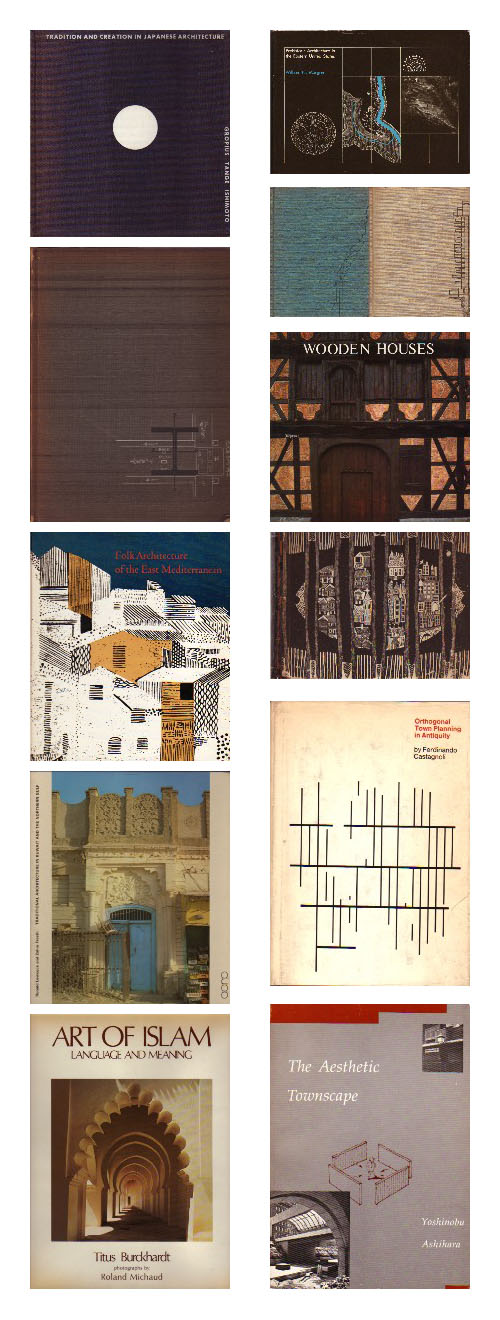
A selection of Kidder Smith's books shows an equal appreciation of Modernism and the vernacular. Here's some books that stood out for me, in no particular order:

kidder-smith.jpg

Left column, top to bottom:
Katsura: Tradition and Creation in Japanese Architecture. Tange, Kenzo, Walter Gropius, and Yasuhiro Ishimoto. 1960.

The Japanese House: A Tradition for Contemporary Architecture. Engel, Heinrich. 1964.

Folk Architecture of the East Mediterranean. Branch, Daniel Paulk. 1966.

Traditional Architecture in Kuwait and the Northern Gulf. Lewcock, Ronald and Zahra Freeth. 1978.

Art of Islam: Language and Meaning. Burckhardt, Titus. 1976.
Right column, top to bottom:
Prehistoric Architecture in the Eastern United States. Morgan, William N. 1980.

American Building Art. The 19th century - The 20th century (2 Vols.). Condit, Carl W. 1960-61.

Wooden Houses. Futagawa, Yukio. 1978.

Norwegian Architecture Throughout the Ages. Alnaes, Eyvind and Georg Eliassen, Reidar Lund, Arne Pedersen, Olav Platou. 1950.

Orthogonal Town Planning in Antiquity. Castagnoli, Ferdinando. 1971.

The Aesthetic Townscape. Ashihara, Yoshinobu. 1983.
While Stout's prices can be a bit steep ($700.00 for the book on traditional architecture in Kuwait!), it's really interesting to see an individual's library in one place like this, illustrating his interests throughout his life, but also -- and maybe most importantly -- the importance of books in that life.

G.E. Kidder Smith's featured books can be found here and his whole library at William Stout can be found here.

0 Comments:

Post a Comment

<< Home

Tuesday, June 26, 2007

Looking at Lynn Becker's blog I was taken aback to see my cartoon face (along with Edward Lifson and somebody who turns out to be Kevin Nance) with a big X across it, though looking at his article on the withering architectural coverage in my old beat, Chicago, I realized he wasn't out to whack me.

becker-trio.jpg

Check out the piece for some bad news (besides Becker, Kamin's the only name in town, once again) and the good news (AIA Chicago is overhauling its magazine -- something I ranted about a year ago, before I left for New York -- and Lee Bey's web page is now in blog form, meaning more frequent postings and a feed).

1 Comments:

At Wednesday, June 27, 2007 4:57:00 PM, Blogger Victor said...

It does look like you're in the dead pool...


Post a Comment

<< Home


slice, originally uploaded by twoeightnine.

East Building of the National Gallery of Art by I. M. Pei.

To contribute your Flickr images for consideration, just:

:: Join and add photos to the archidose pool, and/or
:: Tag your photos archidose

Labels:

0 Comments:

Post a Comment

<< Home

Monday, June 25, 2007

About a month ago Curbed posted images of One Jackson Square, an undulating, glass-wall mid-rise designed by Kohn Pedersen Fox (KPF) for the corner of Greenwich and 8th Avenues.

1JS1.jpg

Being a sucker for the sexy sight-specific gesture (a la their famous 333 Wacker Drive in Chicago), I bookmarked the page for some investigation, but have just now gotten around to it.

1JS4.jpg

As mentioned, the site is located at Greenwich and 8th Avenue (currently an open lot used for surface parking), across from the triangular Jackson Square. The neighborhood is the convergence of Greenwich Village, the Meatpacking District, and Chelsea.

1JS2.jpg

Even with these credentials (three immensely popular neighborhoods and a patch of green), the immediate site is less than friendly, with lots of traffic on both Greenwich and 8th Avenues to contend with. Crossing 8th, especially, is quite an adventure.

1JS5.jpg

This image below shows the appeal of the design, its walls curling around the corner to, in effect, connect the different neighborhoods, at least as a gesture. It makes for an appealing face across from Jackson Square and its scale is suited to the surrounding buildings and streets.

1JS6.jpg

What also makes this project appealing to me is the presentation, the way the renderings acknowledge that there will be a variety of furnishings, curtains, and light levels taking place behind the transparent curtain wall. So many glass buildings ignore this fact, and therefore can't live up to their intentions as presented in glossy renderings. While I'm still critical of glassy buildings and prefer buildings with some weight or mass, I'm digging these curves.

1JS7.jpg

As well, the undulations continue into the lobby, recalling the spaces of Richard Serra's sculptures on display this summer at MoMA.

1 Comments:

At Tuesday, June 26, 2007 4:07:00 AM, Blogger Emi said...

http://architetturaeffimera.blogspot.com


Post a Comment

<< Home

My weekly page update:
image01sm.jpg
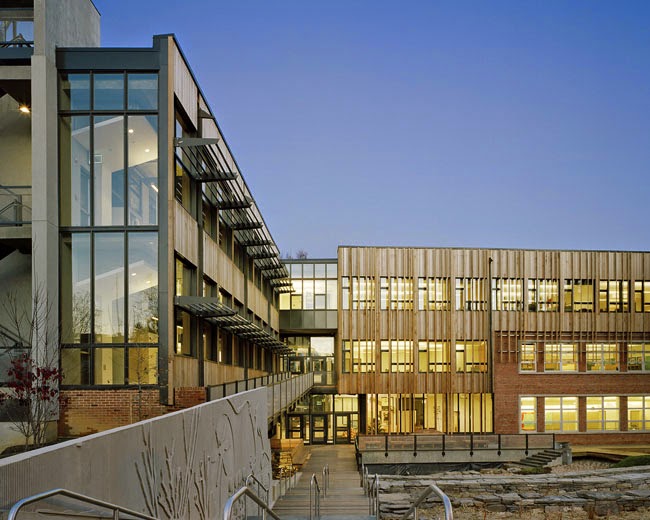
Sidwell Friends Middle School in Washington, District of Columbia by Kieran Timberlake Associates.

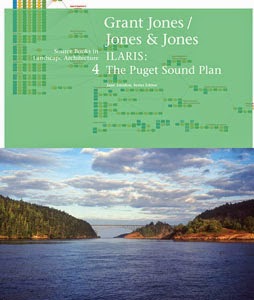
The updated book feature is Grant Jones/Jones – Jones: ILARIS: The Puget Sound Plan, edited by Jane Amidon.

Some unrelated links for your enjoyment:
The Brothers Brick
A blog devoted to, yep, LEGOs.

Cool Town Studios
A blog focused on real estate development targeted at urban smart growth for the creative class. (via Architect Online; added to sidebar under blogs::urban)

Kreutzer and the City
A new blog in Danish (and sometimes English) by Danish architect David Kreutzers. (added to sidebar under blogs::architecture)

0 Comments:

Post a Comment

<< Home

Sunday, June 24, 2007

Here's something I'll definitely have to keep an eye out for:

barge.jpg
The Science Barge is a sustainable urban farm designed by New York Sun Works, an environmental nonprofit organization. The Science Barge tours New York City’s public waterfront parks, offering sustainability education programs to wide audiences.
(via Coudal)

1 Comments:

At Monday, June 25, 2007 10:24:00 AM, Anonymous sideofwisdom said...

Wow, I wish they would have designed the new MOMA.


Post a Comment

<< Home

Saturday, June 23, 2007

Yesterday I made it to MoMA to see the Richard Serra Retrospective, on display in the courtyard and two interior galleries until September 10.

Two large-scale pieces are located in the courtyard, one of them being Intersection II, from 1992/3. Four identical conical sections are placed in a roughly mirrored, symmetrical composition, creating a central space and two curving paths on either side. It's a great piece to walk through, as well as to watch how people move through and react to the massive cor-ten steel sections.

Serra at MoMA

The steel, although weatherproof, has a flakiness along much of the lengths that rewards close inspection.

Serra at MoMA

Intersection II's siting in the courtyard appears to relate itself to the other exterior Serra, 1998's Torqued Ellipse IV, as its "axis" points to the latter.

Serra at MoMA

Torqued Ellipse IV is a continuous tilting plane with a small gap for access to the interior space. Even though Serra points the first of his pieces towards this second one, the visitor must walk around it to reach the interior, making he or she experience the changing perspective of the steel's tilt.

Serra at MoMA

While the two pieces outside are what Serra's become known for, the three new pieces in the second floor galleries take his sculpture to another level, experientially. My favorite, Sequence (pictured below from MoMA's web page, as photography is not allowed in these galleries), is comprised of two continuous bands that interlock to create a sort of "S" from overhead, though as I moved along the winding path it was close to impossible to picture it in plan; or, as described in the exhibition literature: "This work engages with memory -- with the inevitable inability of the viewer to construct any distinct memory of these almost indistinguishable and every-changing spaces."

serra2a.jpg

Thinking back to the experience of the pieces in the courtyard and in the second floor gallery (the sixth floor gallery is mainly older work I won't deal with here), I wonder what made the interior experiences so much more impressive than the courtyard ones for me, in addition to the complexity of the spaces created by the ever-present tilting cor-ten planes. I've concluded that the gallery space itself has a lot to do with it. The courtyard context not only distracts from, or competes with the pure experience of Serra's sculptures, it is also on a scale much greater than the spaces he created. Inside, the space containing the sculptures is only slightly larger (making one wonder how the pieces were installed) so the experience of the sculptures' spaces is that much more "pure." As well, the white walls and ceilings are a great contrast to the rusted steel.

serra2b.jpg

1 Comments:

At Monday, June 25, 2007 10:22:00 AM, Anonymous sideofwisdom said...

Now that is how you make a wall.


Post a Comment

<< Home

Friday, June 22, 2007

Here's a great excuse to travel to Australia.

UDC-waves.jpg

International Urban Design Conference
Gold Coast, Australia 6,7 & 8 September, 2007.

The Conference theme “Waves of Change – Cities at Crossroads” will challenge us all to examine our towns and cities.

Population growth and economic prosperity have consequences on the environment and on the longer term social well-being of our communities.

The wave of environmental challenges will affect communities through global warming and likely sea level rises. The ability of urban centres world-wide to cope with the impacts of high level fuel costs will also be examined. The physical separation of home from work and recreation may need to be re-addressed in city design.

>> Day one celebrates the official conference launch followed by challenging keynote addresses about the issues confronting our cities and what we might do about it.

>> Day two is a whirlpool of presentations taking the macro view down to micro insights into local and international research, design tools and models that can lead the way towards sustainable urban habitats.

>> Day three erupts with a hot debate moderated by Jennie Brockie, followed by even more keynote addresses exploring the ways and means of building capacity within our communities, our future designers, and policy makers to implement the necessary adaptations to our cities.

The event includes workshops, debates and tours of South East Queensland, Australia’s fastest growing region showcasing the attributes of a premier tourist destination, from tall buildings to medium density housing to the hinterland “Eco-village” development.

The conference Gala Dinner will include the bi-annual Gold Coast Urban Design awards for 2007.

Confirmed speakers include:

* Mr Michael Sorkin - USA
* Prof Kongjian Yu - China
* Mr Michael Norton - UK
* Prof Elaine Gallagher - Canada
* Prof Ian Bentley - UK
* Mr Jeremy Harris - USA
* Ms Ruth Durack - AUS
* Mr Richard Neville - AUS

0 Comments:

Post a Comment

<< Home

Thursday, June 21, 2007


sverre_fehn_biennale_nordic_pav2, originally uploaded by jiathwee.

Nordic Pavilion in Venice, Italy by Sverre Fehn (1962).

To contribute your Flickr images for consideration, just:

:: Join and add photos to the archidose pool, and/or
:: Tag your photos archidose

Labels:

1 Comments:

At Saturday, June 23, 2007 6:28:00 PM, Blogger Tom said...

Read how I did my green home, and view the presentation I made to the Montgomery County committee, They have a good tips site, as well.

green home


Post a Comment

<< Home

Wednesday, June 20, 2007

Last night I attended a presentation and panel discussion on New Waterfront Housing in Brooklyn and Queens. Three of the four* recent and ongoing projects presented are located on the East River, on former industrial sites.
:: Queens West by Arquitectonica
:: River East by Studio V
:: Northside Piers by FXFowle

And not presented last night, but discussed here is
:: Silvercup West by Richard Rogers
(*The fourth project presented was Averne by the Sea by EEK Architects.)

Moderator Bonnie Harken raised some important issues, ones not adequately addressed in the presentations or the later discussion. These include the allotment and design of public spaces in private developments, access to the waterfront, affordable housing, and issues of sustainability. I'll try to address these issues relative to each, though I'm more interested in the overall effect of these developments, on the city, the waterfront, and the environment.

EastRiver1.jpg
Location plan

As can be seen in the aerial above, three of the four developments along the East River occur in a tight clump in Long Island City, across from Midtown Manhattan and Roosevelt Island. Only Northside Piers is located in Brooklyn, in the Williamsburg neighborhood. The projects are presented below south to north.

EastRiver2.jpg
Northside Piers: Aerial view and west-facing facade of tower one

Northside Piers is a three-tower condo development with townhouses and enclosed parking. Phase one, now under construction, includes the easternmost tower and its podium. Daniel Kaplan from FXFowle primarily talked about the design's attempt to be contextual to both the neighborhood and the water, the former grounded by gravity and the latter floating or levitating.

EastRiver3.jpg
Queens West Stage II: Aerial rendering from the west

Arquitectonica's portion of the huge Queens West development is six residential towers atop or attached to podiums with low-rise housing and parking, the last pushed to the eastern edges of the site, away from the valuable real estate by the water. Bernardo Fort-Brescia spoke of the East River's potential as being a space about which the city is oriented, like Paris or London, unlike New York's past which has turned its back on the water.

EastRiver4.jpg
River East: Two aerial renderings from the west, from QueensWest.com

Small by comparison to the previous two developments, River East is a two-tower residential development with townhouses concealing parking on a podium base to the east of the towers. The site plan creates a street that ends at a plaza near the water. Jay Valgora of Studio V spoke of their attempt to incorporate some of the qualities of Long Island City's traditional architecture and urban scale into the project (townhouses, "green" billboards), while using a contemporary language throughout.

EastRiver5.jpg
Silvercup West: Rendering looking northeast

As mentioned already, Silvercup West was not part of last night's presentation, though along with River East and Queens West it is part of a string of developments that will create a wall of sorts along the East River in Long Island City. Unlike the other developments, Silvercup West incorporates office space in one of its towers, the northern one closest to the Queensborough Bridge.

The three projects discussed last night have numerous similarities, most likely dictated by the fact they are all developer, market-rate projects located on the water: glassy towers with balconies; low-scale podiums with townhouses (or similar residential), parking, and retail (in some cases); and open (public) space along the waterfront. In each case the architects used unique concepts and approaches to describe their projects, though ultimately they all arrived at basically the same thing.

The tower on a podium idea can be found in Chicago, Vancouver, and many other North American cities, as a means to be contextual while creating a profit for the developer and capturing views. In the process the towers quickly transform the skyline, while the podiums -- if not treated carefully by the architect and the developer/owner -- become blank walls or decorative fronts that lead to dead streets at odds with the city's context. It's hard to find fault with the architects' approaches, as they all appear to embrace the city's street life and attempt to extend it towards the water, though in the case of these waterfront developments the water must be enough of a draw to bring people that far east, meaning a continuous network of parks and open space is required, not just patches part of each development. FXFowle briefly presented their open space study (PDF linke) for the Greenpoint-Williamsburg waterfront, though with a tight budget and private money to be made in the rezoning of the waterfront, these towers look like they'll outpace the city's attempts at creating parkland on the East River.

Returning to Silvercup West, the main reason I include it here is for contrast. In terms of program, Silvercup West is admirable not only for its incorporation of office space but for its namesake sound studios that will occupy some of the base. These moves ensure two things: an active 24-hour development full of workers and residents, and the extension of a semi-industrial use on the water. What the other developments ignore is what they're replacing, and as the waterfront is eaten up more and more by middle-upper class housing, the industrial uses are pushed further out along with their employees. Granted the city is preserving certain industrial zones, I'm guessing this waterfront is just too valuable for something like Silvercup West to be replicated down the shore. This issue is related to affordable housing, something the architects presented as being part of their projects (approx. 20% in each), though how this affordable mix relates to the context was absent, as context was discussed formally rather than socially.

Architecturally, Silvercup West is an obvious contrast to the other three. Where those are basically variations on the same glass box and brick podium, Rogers conceals the residences behind a steel frame that recalls the adjacent bridge but also gives it a distinct presence on the skyline. As more and more is built (and more and more will be built) along the water in Queens and Brooklyn, architects and developers need to strive for distinction in their buildings, not just their marketing campaigns.

Lastly, a couple issues barely addressed last night were access and sustainability. Some of these areas, particularly the northern stretches of Long Island City and Astoria, are removed from the subway. This creates the need for parking garages and can lead to a relatively dead street life. The city needs to step in and find ways to address this gap, perhaps creating a north-south spine (an elevated on Vernon Boulevard!) that connects the waterfront to the trains connecting Long Island to Manhattan. Issues of sustainability seemed to arise in terms of green space on the waterfront and the preservation of corridors for birds, though I don't recall any discussion of it relative to the architecture, something that needs to be remedied in future developments.

1 Comments:

At Wednesday, June 20, 2007 11:05:00 AM, Anonymous Anonymous said...

FYI
Looks like there's an interesting exhibit on David Macaulay going up in Washington, DC's National Building Museum.

It opens Saturday. The artist will lead the Big Draw that morning.

Quote from their website:
"David Macaulay: The Art of Drawing Architecture focuses on the artist’s use of drawing to research historic buildings, to render architecture from engaging perspectives, to reveal underlying structures, and to critique and redesign, in a playful manner, the contemporary landscape of American architecture."


Post a Comment

<< Home

Tuesday, June 19, 2007


Porto, Metro S.Bento. Álvaro Siza, originally uploaded by z.z.

The Sao Bento station of Porto Metro in Porto, Portugal by Álvaro Siza.

Many more images of the station and other Porto architecture can be found in z.z's architectura, Porto set.

To contribute your Flickr images for consideration, just:

:: Join and add photos to the archidose pool, and/or
:: Tag your photos archidose

Labels:

0 Comments:

Post a Comment

<< Home

Monday, June 18, 2007

My weekly page update:
image01sm.jpg
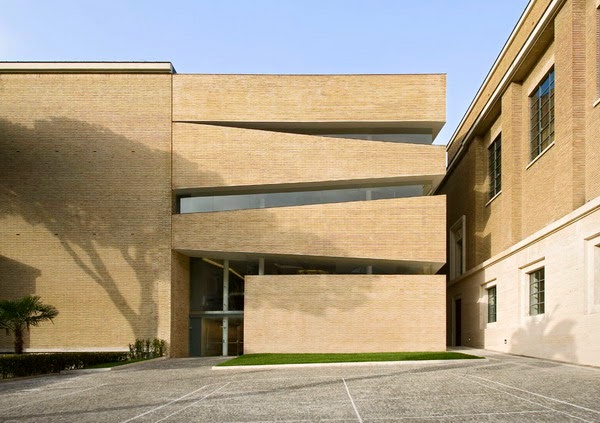
Pontifical Lateran University in Rome, Italy by King Roselli Architetti.

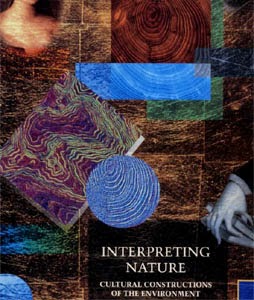
The updated book feature is Interpreting Nature: Cultural Constructions of the Environment, by I. G. Simmons.

Some unrelated links for your enjoyment:
Floating Podium
"The Latest Architectural News and Blogs Floating in the Blogosphere." (added to sidebar under new category blogs::aggregate)

Gaile Guevara
"This design blog is an opportunity to share with those who appreciate MODERN design and quality in details. A source for MODERN inspiration." (added to sidebar under blogs::design)

airoots
"A blog by Rahul Srivastava & Matias Echanove on advenitious roots, urban forests & villages, natural cities, lost tribes, new nomads, and everything in between." (added to sidebar under blogs::urban)

0 Comments:

Post a Comment

<< Home

Sunday, June 17, 2007

Today's CBS Sunday Morning featured a piece on "The Return Of The Silhouette," those portraits fashioned from paper and scissors. While many of the new artworks presented resembled the old Victorian versions that immediately come to mind, the works of Béatrice Coron stood our for the scale involved as well as the subject matter, the city.

coron1.jpg

The above piece, titled Inner City, presents the city as a flattened skyline composed of windows open to the gaze of the viewer. Coron says, "I started the cityscape when I arrived [in New York]. It becomes a kind of medium to say stories. Because usually you have windows to look out on things. And I'm doing windows for looking in."

coron2.jpg

The above detail of Inner City starts to illustrate the scale and level of detail of the piece (52" x 162"), where each window contains a life captured in some sort of stasis. The image below -- though from a different piece called Mule Train -- gets at this detail within here work, from the street furniture and creatures to the types of shoes each person wears.

coron3.jpg

One of my favorites from Coron's web site is Balloon City: A Floating World, where the city is carried above fields of agriculture on hot-air balloons. It's like a melding of the contemporary city in imagination and the pleasant, Victorian-era way of thinking about the land, where ropes and parachutes allow a free movement between the two realms.

coron4.jpg

1 Comments:

At Sunday, June 17, 2007 5:44:00 PM, Anonymous Anonymous said...

'Frankly' these are my favorites....Frank Miller is the master. I just got done reading the Sin City series again....AMAZING Millers sense of choreography of events and composition and only using positive and negative space. absolutely brilliant. the way he captures nuance details of city fabric or the human form in relation to that space, one is able to completely understand the aesthetic, patina and decrepitness of Sin City

here are a few dandies...

http://www.ronlim.com/worldarchive/sincity.jpg

http://www.robotskirts.com/images/wp/sincity.jpg

http://upload.wikimedia.org/wikipedia/en/a/a0/Thehardgoodbye.jpg

or the movie coming up for Renaissance

http://www.hdforindies.com/uploaded_images/Renaissance-753640.jpg


Post a Comment

<< Home

Saturday, June 16, 2007


Aveiro, João Paulo Loureiro, originally uploaded by z.z.

Smart Residence in Aveiro, Portugal by João Paulo Loureiro.

To contribute your Flickr images for consideration, just:

:: Join and add photos to the archidose pool, and/or
:: Tag your photos archidose

Labels:

1 Comments:

At Saturday, June 16, 2007 3:45:00 PM, Anonymous Preston said...

Wow, this is incredible.


Post a Comment

<< Home

Friday, June 15, 2007

A head's up for those who can make it to Europe next month.

intelligent-coast.jpg

Intelligent Coast* is a center of research on coast and tourism. It aims to develop new qualified coast systems with the help of thinkers and experts coming from different fields.

Intelligent Coast* leads a Master Program, a series of Debates and an International Symposium "Tourism XXL. The European Megalopolis."

TOURISM XXL. THE EUROPEAN MEGALOPOLIS
at CCCB - Center of Contemporary Culture of Barcelona
19 - 20 - 21 of July 2007

Manuel Delanda * Manuel Gausa * Michel Houellebecq * Scott Lash * Rem Koolhaas * Jeremy Rifkin * George Ritzer * Edward W. Soja * José Miguel Iribas * Carlos Ferrater * Raimon Martínez Fraile * Faustino G. Marquéz * Juan Lopez de Uralde * Arnaldo Muñóz * Oriol Nel.lo * Juan Palop * Miguel Ruano * Salvador Rueda * Juan Antonio Sánchez * Federico Soriano * Andreu Ulied * Eugenio Yunis

0 Comments:

Post a Comment

<< Home

Thursday, June 14, 2007


, originally uploaded by Steve'o.

The just-opened, Daniel Libeskind-designed Michael Lee-Chin Crystal addition to the Royal Ontario Museum in Toronto. More images in Steve'o's ROM set.

To contribute your Flickr images for consideration, just:

:: Join and add photos to the archidose pool, and/or
:: Tag your photos archidose

Labels:

0 Comments:

Post a Comment

<< Home

After roaming around parts of Chelsea and the Meatpacking District yesterday, I've posted six new buildings on The Archi-Tourist.

High Line 519

:: High Line 519 by Roy Design (pictured)
:: Gallery Building by Smith and Thompson Architects
:: Morimoto NYC by Tadao Ando
:: DVF Studio Headquarters by Work Architecture Company
:: Carlos Miele Flagship Store by Asymptote
:: Town House by Matthew Baird

1 Comments:

At Sunday, June 24, 2007 8:53:00 AM, Blogger David Kreutzer said...

Hi
I really like your blog! Great content and big pictures - much appreciated. I recently made my own archiblog in Denmark - please visit http://kreutzerandthecity.blogspot.com (its part english/danish)
It will be more and more english of course. I will make a link to your site and you are welcome to link to my blog to.
To a great Denmark - New York - Archi - relationship!

keep writing.

best regards,
David Kreutzer, Architect MAA
Denmark


Post a Comment

<< Home

Tuesday, June 12, 2007

One of the exhibits currently on view at AIA New York's Center for Architecture is Powerhouse, the New Housing New York Legacy Project won last year by Dattner Architects and Grimshaw Architects. This winning project, located in the South Bronx and comprised of affordable housing with a co-op and medical center, will be built under Mayor Bloomberg's 10-year New Housing Marketplace initiative.

ViaVerde1.jpg

The project was part of a conference this morning called Fit City 2: Promoting Physical Activity Through Design. As can be seen from the rendering above, the project is emblematic of attempts at incorporating physical activity via a series of stepped roof gardens and a central courtyard. The project also features a fitness center (as part of the medical component) to give residents the opportunities they might not otherwise have in affordable housing.

While the merits of the projects are clear, and it is deserving of first place in the competition, it seems very familiar to me. That's because it reminds me of a building I posted about earlier this year: Hundertwasser's Waldspirale in Darmstadt, Germany (show inset below with the Dattner/Grimshaw model on display at the Center).

ViaVerde2.jpg

Each project spirals about a central courtyard, ascending as it turns clockwise; each project buries parking underground; and each project uses a green roof as a common space. Of course the biggest difference between the two is the way Dattner/Grimshaw's project -- arising from a Modernist vocabulary of orthogonal planes, most clearly shown in the model -- steps at the green roof, unlike the gradual climb of the Waldspirale. While adjacent roofs will be accessible via stairs, this vertical separation seems like a missed opportunity (though perhaps intentionally so if they were inspired by the German development and didn't want to repeat it too closely), especially when one notices how the green patterns in the model continue from one step to another. This stepping is also indicative of Modernist planning, that separates uses, in this case the community garden at the bottom of the model (colored boxes), the "party terrace" at the top of the tower, and recreational green in between.

The architect from Dattner's office admitted at the conference that while the competition asked for the project to be a template of sorts, the winning design is highly site-specific (like Waldspirale) and therefore cannot be directly exported to other locations. But certain principles and elements can be exported, including the green roof as communal space, a good idea that will need a great deal of resident involvement over time to be successful as Hundertwasser's project is today.

4 Comments:

At Wednesday, June 13, 2007 4:53:00 PM, Blogger Victor said...

Hey, John, I was wondering... it's just a question, not really hundertwasser-related (even though I find him very interesting). Of all those sites in the column to the right, which ones are the ones you visit frequently?

 
At Wednesday, June 13, 2007 5:11:00 PM, Blogger Victor said...

That's strange. I hadn't read the "blog survey" post before asking the question... but I agree with G. Yours is the only architecture blog on my bookmarks toolbar, John.

 
At Thursday, June 14, 2007 3:34:00 AM, Anonymous sakthi said...

Wow!!!The building looks great and it is just a symbol of majestic...I want to build home like this,Oh!Ambani already start building his 27 floor house in India...
AA Breakdown Cover

 
At Friday, June 15, 2007 10:57:00 AM, Blogger John said...

Victor - I wrote a long reply to your question yesterday and posted it, but somehow it's gone. Anyways, a shorter answer is that I use Bloglines to look at sites, and tend to read (rather than just skim) pages that post less frequently than this page, for example, but have more in-depth coverage and presentation of ideas, like Brand Avenue, one of the sites on the Architect Online survey. And given that I've turned into a feed-reader rather than a web-surfer, how the feed is presented (full vs. truncated) helps determine if I just read it there or have to visit the site to finish it, in the last case meaning the writer(s) has to "pull me in" in the first few lines, or even the headline, or I'll just keep scrolling...not that that's apparent to most people writing blogs. Check out my Bloglines Feeds (also found in the sidebar under My Other Stuff) to understand what I mean.


Post a Comment

<< Home

On the heels of Postopolis! comes a survey over at Architect Online that asks which blogs/websites do you read on a regular basis and what do you think of blogs? Yours truly is one of the blogs listed, alongside a few other wonderful blogs and Archinect (which always gets lumped in with other blogs, somehow). So even if you think this and other pages are a waste of time, head on over and click, click, click. Results can be viewed here.

blog-survey.jpg

From an Architect Online e-mail:
"Do you blog? Online punditry has emerged as a new force in the world of architectural media. Which bloggers do you love to read—or love to hate? Let us know by responding to our latest reader survey. The results will appear in an upcoming issue of ARCHITECT."

4 Comments:

At Tuesday, June 12, 2007 10:23:00 PM, Anonymous Lil'G said...

J-
Your kickin arse in the poll...deservidly so. You have the best architecture blog around.

 
At Wednesday, June 13, 2007 10:52:00 AM, Blogger John said...

You're too kind, G!

 
At Saturday, June 23, 2007 2:14:00 AM, Blogger Brendan said...

This post has been removed by the author.

 
At Saturday, June 23, 2007 2:17:00 AM, Blogger Brendan said...

I remember, after finding that poll, almost immediately thinking "The hell?"

I know this has been said a million times already, but what the hell: Archinet isn't a damned blog. On top of that, calling Inhabitat and Worldchanging "architecture blogs" is pretty woefully inacurate, I think. That's like calling the New York Times a business paper. It's a fraction of the content.

At any rate, I'm just smirking because it looks like an intnern somewhere forgot to do his research. As for Archidose, Brand Ave, and Tropolism...well, at least for the half of the bunch that actually *are* architecture blogs, they picked some of the best. ;-)


Post a Comment

<< Home

Monday, June 11, 2007

My weekly page update:
image04sm.jpg
Main Station in Stuttgart, Germany by Ingenhoven Architects.

The updated book feature is Blue Monday: Stories of Absurd Realities and Natural Philosophies, by Robert Sumrell & Kazys Varnelis.

Some unrelated links for your enjoyment:
Zaha Hadid Blog
Half blog, half exhibition promotion...All Zaha.