Posts

Showing posts from September, 2004

Piu Kapoor

Image
Anish Kapoor's Cloud Gate has received nearly unanimous praise since it was unveiled for Millennium Park's opening this summer. For those curious about the artist and his other works, the Galleria Massimo Minini in Brescia, Italy is hosting a one-man show on Kapoor. The image above shows an installation made especially for the show, similar to Cloud Gate in its large size and the viewer being able to walk under the sculpture. Each piece also affects the viewer's perception of their surroundings as they move around and under it. Looking at the image of the large artwork in Italy, it is refreshing to think that Chicago has received a sculpture that is specific to its location - the skin reflecting and warping its context and the sky - something that might not be as effective elsewhere. Kapoor's ability to find an appropriate expression for each installation's context makes him a very important artist today. For those able to make it to Italy, Kapoor's one-man s...

Events Galore

A few end-of-week events in Chicago of note: Sustainable Communities: Learning from the Dutch Experience , highlighting "highlight innovations in green design; environmental safety; public policy; economic incentives in building sustainable communities; architecture and design." Speakers include Aaron Betsky ( NAI ) and Nathalie de Vries ( MVRDV ), though Ben Van Berkel ( UN Studio ) has cancelled. The symposium is taking place today and tomorrow at the HUB-Center of IIT at 3241 South Federal. Designight 04 , AIA Chicago 's "festive evening celebrating architecture and the 49th Annual Design Excellence Awards" for AIA Chicago members. Festivities are in the Grand Ballroom of Navy Pier with special guest speaker Aaron Betsky making his rounds while in town. I will post news on the winners early next week after they are made public. And if you're not affiliated with the AIA, check out: Between Past and Future: New Photography and Video from China , ...

ArchiRaid

Browsing through the News section over at Archinect, I came across these links of interest: Let It Be , Philip Nobel's critique of the four High Line finalists , from Metropolis Magazine. Nobel's stance that architects rely too much on buildings, even though they have created a situation where they have responsibility for everything from "the spoon to the skyscraper", is reinforced by three of the four finalists' entries, one being the winner. He argues that in this case the appropriate solution should have valued landscape over building, as in the TerraGRAM entry . Built to thrill (classic) and Built to thrill (new) , travel suggestions for the architourist. Capitalizing on a renewed interest in architecture, much like Time magazine's Great Buildings of the World , Budget Travel magazine picks twelve buildings in each category, all obvious to architects and students of architecture, but many new or unknown for the general public. Not surprisingly, all...

The Price of Viewing Art

Image
The Museum of Modern Art recently announced that admission to its Midtown location, to be reopened on November 20, will be a whopping $20 (an increase of eight dollars over its current admission price), making it the most expensive art museum in the country. Citing higher insurance and security costs, decreased tourism since September 11, higher employee salaries, and costs related to its expansion, most likely the cost increase will work, at least for a while, with Yoshio Taniguchi's addition the star of its reopening. Also, MOMA's yearly membership will become more enticing ($75 individual and $150 family) since admission would be free for members. And, as the New York Times points out, the expansion will allow more of MOMA's collection to be displayed, making a day at the museum more worthwhile. In comparison with other museums: $20 - MOMA, New York (flat fee, free on Friday evenings) $12 - Art Institute of Chicago (suggested admission, free on Tuesdays) $12 - Met...

Genius Carpenter

Image
The John D. and Catherine T. MacArthur Foundation, today announced that James Carpenter is the recipient of one of the 23 MacArthur Fellowships this year. Carpenter, "an artist and sculptor with a strong background in developing new and emerging glass and material technologies," will receive $500,000 in five equal installments over the next five years, to do with whatever he pleases, no questions asked, one of the perks of winning the prestigious award.

Sickening Sprawl

Image
Today, the Chicago Sun-Times reports that, " Suburban sprawl [is] sickening ". While this may not come as a surprise to many readers, a study by Rand Corp. found that, "people in high-sprawl regions have more health problems such as diabetes, breathing difficulties, migraine headaches and high blood pressure...[and] that living in a high-sprawl area has the equivalent effect on your health as aging four years." While the study does not determine the causes of these results, researchers, "cited an earlier study that found people who live in high-sprawl areas walk less, weigh more and have a higher rate of high blood pressure." Additionally, the author of the Sun-Times piece puts his spin on the findings, indicating that Chicago has an above-average "sprawl index", * with areas like Atlanta, Detroit, West Palm Beach and San Bernardino suffering the worst sprawl. Regardless, Chicago's outer suburbs are sprawling and alternative developments, ...

Book Review: Two Atelier Bow-Wow Guides

Image
Made in Tokyo by Junzo Kuroda and Momoya Kaijima, published by Kajima Institute Publishing Co., 2001. Paperback, 192 pages. ( Amazon ) Pet Architecture Guide Book by Atelier Bow-Wow and others, published by  World Photo Press, 2002. Paperback, 176 pages. ( Amazon ) These two books present alternative guides to the built form of Tokyo, different than the typical architecture guides that survey single buildings by known architects. Respectively Made in Tokyo and Pet Architecture look at the non-designed yet functional hybrids of the city's current situation and the tiny structures that fill the gaps in the city's fabric. A good example of the former is the highway department store, two floors ...

Ceramics Park MINO

Image
Ceramics Park MINO in Tajimi, Gifu, Japan by Arata Isozaki, 2002 Japan's ceramic tradition crosses over with many of its other traditions: tea, sake (rice), and food, to name a few. The region around Tajimi - in Gifu Prefecture - is one of the most important for clay and ceramics in the country, particularly in the tea ceremony. Ceramics Park MINO is a facility aiding in extending this traditional craft, as well as a place to view ceramic artwork, attend conventions, and experience nature. Comprising the Museum of Modern Ceramic Art, exhibition and convention spaces, a restaurant, a shop and gallery, an atelier, a tea ceremony house, and an observation tower with nature trails, the Ceramics Park is definite...

The First Insurrection

Invisible Insurrection , The Magazine of Speculative Nonfiction, recently launched its first issue, Architecture, Technology & Surveillance After 9-11 . Various articles are available in .html format, with the whole issue available as a PDF . For editors Karrie Higgins and Alan Murdock , "speculative art & writing is contemplative in nature. It speculates about possibilities and imagines the unimaginable...takes risks in content [and/]or form...pushes boundaries and raises questions...[and]steps outside the purely personal and ventures into science, news, history, and other fields." Future issues include The Stilletto in Her Back: Women Oppressing Women and Bankrupt . Anybody is welcome to submit articles, photos, videos, etc.

70 Years Later

Image
Yesterday saw the opening of the Chicago Architecture Foundation 's exhibit, A Century of Progress : Architecture and Chicago's 1933-34 World's Fair , on view until November 21. "Architectural renderings, souvenirs, and never-before-seen photographs recall" the typically overlooked of the two Chicago Fairs, the 1893 Columbian Exposition taking precedence in people's minds and history books. From the press release: Even though the city’s economy suffered during the Great Depression, Chicago’s leaders decided to celebrate the city’s centennial year by building a colossal World’s Fair to be designed by some of the country’s most prominent architects. The exposition highlighted the scientific, industrial and technological advances that had occurred during the last hundred years, including many avant-garde ideas in architectural design. This exhibition, presented in partnership with the Chicago Park District, looks at the Century of Progress’s historical legacy and...

All About Parks

This month's Project for Public Spaces newsletter is dedicated to parks, the good, the bad and the in-between. Features include: The World's Best and Worst Parks It appears that one variable that makes a park great is time, as the worst parks and squares tend to be newer than the greats, needing time to evolve and hopefully grow as public spaces. Five Parks that Need a Turnaround Including Pershing Square in Los Angeles, designed by Ricardo Legoretta with his trademark splashes of color and water. Having stayed at a hotel next door, I was witness to the complete lack of use of the park, outside of the skating rink(!), that is. Town Square Jay Walljasper's review of Millennium Park in Chicago (with photos by yours truly), which rightly points out that the continued success of the park will be attributed to its public spaces rather than the architectural and artistic objects within the park.

Game of the Moment

Image
Prestel has released The New York Architecture Game , billed as a winning combination of fun and learning. "Conceived by the world-renowned game designer Thomas Fackler, The Prestel New York Architecture Game challenges players as it explores the architectural feats that went into constructing twenty-four New York City landmarks such as the Empire State Building, the Guggenheim Museum, the New York Stock Exchange, and the Brooklyn Bridge...this game will give even the most jaded New Yorkers a new reason to fall in love with the world's most exciting city."

Motels on Lincoln

Image
On WBEZ's Eight Forty-Eight , Ed Keegan takes the listener on a tour of Lincoln Avenue Motels (Real Audio link), finding merit in their architecture, signage and urban design, and arguing the City of Chicago shouldn't target them for demolition. Built at a time when the main automobile access to the city from the north was Lincoln Avenue, these motels are very appealing to me, and many other people , relics from a different era (the 1950's), but also interesting pieces of design at the varying scales that Keegan talks about.

Back Home

Image
Got back home from Japan last night, so posts should resume regularly starting today/tomorrow, perhaps including a story or two from overseas. Window seat view over Alaska

More Japan Pics

Image
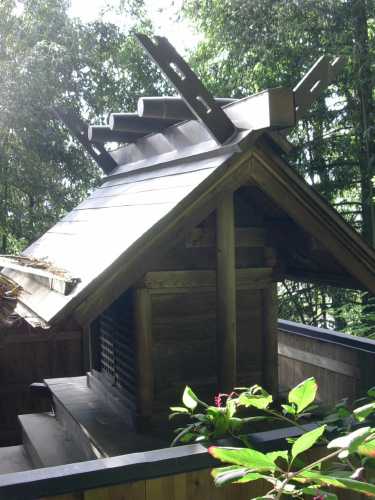
More photos from Japan, this time from a road trip to Kyoto, Nara, Toyama and other areas west of Tokyo. Shinmei-gu Shrine near Matsumoto Horyuji Temple in Nara Ryoanji Temple in Kyoto Nanzenji Temple in Kyoto A portion of Frank Lloyd Wright's Imperial Hotel, at the Meiji-Mura Village Museum Church of the Light by Tadao Ando Inami Woodcarving Museum by Peter Salter Mountain Pavilion near Kamiichi by Peter Salter Ceramics Park MINO by Arata Isozaki Glass Temple near Kyoto by Takashi Yamaguchi

Japan Pics

Image
A bunch of images from my visit to Japan so far. The Great Buddha in Kamakura Meiji Jingu Shrine The "Golden Gai" area of Shinjuku in Tokyo Shinjuku at night Tadao Ando's La Collezione Toyo Ito's Tower of Winds Yoshio Taniguchi's Gallery of Horyu-ji Treasures Jun Aoki's Louis Vuitton store Kazuyo Sejima's Christian Dior store FOA's International Ferry Terminal in Yokohama One Omotesando Klein Dytham's Undercover Lab

Changing Place/Changing Times

Image
Published in Invisible Insurrection, Fall/Winter 2004, "Architecture, Technology & Surveillance After 9-11" Chicago is a city known for its buildings, rather than its spaces. One thinks of the Sears Tower, the John Hancock Center, Lake Point Tower, Marina City, all remarkable examples of the high-rise as an object. Each creates a place within the city through its form, but of these examples only Marina City goes one step further and creates a space, the space between the two “corncob” towers as well as the interstitial spaces between each project element. Here, the spaces are leftover from the congested use of the site for different uses (residential, hotel, cultural, parking) within different objects (five in all). Physically it’s a fascinating place, but its relationship to the city around it happens really only at the river with a boat dock and a restaurant; otherwise its focus is internal, a city unto itself, as its name suggests. But when one thinks of the grea...

Overseas

Image
During my trip to Tokyo, posts will be occasional to rare for the next two weeks, though I will try my best to post some images while in Japan. Regular posts will resume upon my return.

Book Review: Japanese Architecture as a Collaborative Process

Image
Japanese Architecture as a Collaborative Process: Opportunities in a flexible construction culture by Dana Buntrock, published by  Taylor & Francis, 2002. Paperback, 208 pages. ( Amazon ) Dana Buntrock, assistant professor at the University of California, Berkeley, sets her book apart from others by approaching the subject of Japanese architecture from an American perspective that focuses on the process rather than the product. She gives a brief historical overview of Japanese building and construction, illustrating the changes and consistency since the country's evolving westernization since the late 19th century, while also comparing and contrasting education in Japan and the United States. ...

Mawson Lakes School

Image
Mawson Lakes School in Mawson Lakes, Australia by Russell & Yelland Architects, 2004 The following images and text are courtesy Russell & Yelland Architects for their award-winning Mawson Lakes School, in association with Guida Moseley Brown Architects . Photographs are by John Gollings and Steve Rendoulis. In its close proximity to the University of South Australia, Technology Park and new accommodation for the elderly, lifelong learning was considered in new and flexible ways in the design of Mawson Lakes School. Stage 1 of the school caters for ages 3-13 and was part of a much wider exploration of learning in the 21st century. The architects consulted over 40 individuals and groups before design commenced. The site area is less than half...