Sunday, February 21, 2010

Moving

Posts will be light for a week or two as I pack and move house. I'm also taking this week off for my weekly page.

moving2010.jpg
["Pulling Mike and Hilda Symmonds house across the road in Conche" | image source]

Update 03.02: Just got internet service today at the new place, so my weekly page will resume next week (2010.03.08). Daily posts should resume shortly.

Friday, February 19, 2010

Today's archidose #396

Here are some night shots of a couple buildings completed last year as part of the AT&T Performing Arts Center at the Dallas Arts District in Dallas, Texas. Photographs are by redblank.

Wyly Theatre at Night
[Dee and Charles Wyly Theatre by REX/OMA (see REX's Joshua Prince-Ramus speak about the building at TED.)]

Winspear Opera House
[Margot and Bill Winspear Opera House by Foster + Partners]

To contribute your Flickr images for consideration, just:

:: Join and add photos to the archidose pool, and/or
:: Tag your photos archidose

Thursday, February 18, 2010

Half Dose #75: Rolex Learning Center

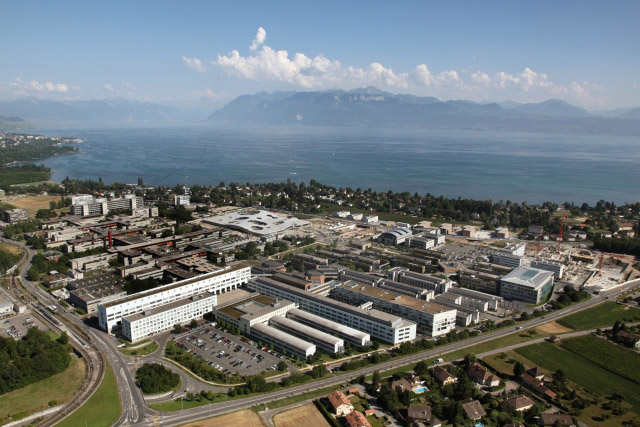
Featured a few years ago in project form, the Rolex Learning Center by SANAA is now complete and opens on February 22 in Lausanne, Switzerland. Back then I discussed the design in terms of the trend of "Swiss cheese architecture," probably unrelated to the building's location but nevertheless found in a number of building designs by SANAA and other architects.

HD75a.jpg
[Rolex Learning Center within the EPFL campus / ©EPFL/Alain Herzog / modified by archidose / click for original]

One aspect of the Rolex Learning Center which sets it apart from other horizontal buildings punctuated by round or elliptical courtyards (see Burr Elementary School by SOM) is the building section, the way the slice of cheese undulates along the ground's flat plane. In a sense the building becomes the landscape; instead of cutting and filling the earth to provide access underneath, the building rises and falls to accomplish the same.

HD75b.jpg
[Rolex Learning Center / EPFL / SANAA / ©Hisao Suzuki / click for larger view]

So to what end does the undulating cheese building accomplish? It allows movement across the site without entering the building. It creates a unique topography and experience inside for visitors. And it creates a distinctive appearance for the building, especially on end, where one can see the building's elevation curve.

HD75c.jpg
[Rolex Learning Center / EPFL / SANAA / ©Hisao Suzuki / click for larger view]

What most intrigues me are the in-between spaces underneath the building's "bridges." These highly compressed spaces, finished in raw concrete, have potential in terms of programming (performances, exhibitions, gatherings), though at the moment the outdoor spaces are envisioned as places of relaxation.

HD75d.jpg
[Rolex Learning Center / EPFL / SANAA / ©Hisao Suzuki / click for larger view]

The program of the Learning Center currently includes a scientific library with study areas, the CRAFT Laboratory -- a research center for EPFL (Ecole Polytechnique Fédérale de Lausanne) -- and the Rolex Forum -- an ampitheater with stage for 600 people -- and dining spaces. With these aims and programming, it sounds like the only spaces open to the public are the exterior spaces under the building and within the courtyard. If this is the case, the undulations seem justified. Without them the student and research facility would be a walled-off, impenetrable mass.

HD75e.jpg
[Rolex Learning Center / EPFL / SANAA / ©Hisao Suzuki / click for larger view]

Nevertheless this condition (no interior public space) is unfortunate, because the interior spaces appear quite striking, in their empty state at least. They seem like diagrams for flows of information, unimpeded by walls and right angles. Perhaps a metaphor for the sharing of data that is important with scientific research?

HD75f.jpg
[Rolex Learning Center / EPFL / SANAA / ©Hisao Suzuki / click for larger view]

One design feature I question is why the roof parallels the floor. Maybe it was cheaper to reuse the formwork; after pouring the floor the forms could be raised for the roof. As well this makes the glass and its framing a consistent height, cheaper and easier to fabricate. Regardless, having the two slabs parallel means that the space is undulating but uniform. But if the roof plane did it's own thing -- maybe flat, or undulating in a different direction -- then the spaces would have further tension and compression, even more variety and diversity. As is it's still a remarkable building that transcends its Swiss-cheeseness.

Wednesday, February 17, 2010

Today's archidose #395

Here are some photos of the Hale County Animal Shelter in Greensboro, Alabama by Rural Studio, 2006. Photographs are by schopaia.

P1020441

P1020441

P1020428

To contribute your Flickr images for consideration, just:

:: Join and add photos to the archidose pool, and/or
:: Tag your photos archidose

Tuesday, February 16, 2010

Breaking News! Barbie NOT an Architect!

In news that probably won't surprise anybody, the results of the voting for Barbie's next profession (reported earlier, where architect was in the running against four other careers) are in, and the blond doll will not be an architect. The winners? News Anchor (girls' vote) and Computer Engineer (popular vote). It looks like Despina Stratigakos's campaign could not even help drum up enough votes for our profession to be immortalized as a skinny figurine.

barbie2.jpg

Well, as they say, it was an honor just being nominated.

(Thanks to Yazan's comment on my previous post for the heads up!)

Monday, February 15, 2010

Monday, Monday

My weekly page update:

This week's dose features Split Level House in Philadelphia, Pennsylvania by Qb:
this week's dose

The featured past dose is Rag Flats in Philadelphia, Pennsylvania by Onion Flats:
featured past dose

This week's book review is Installations by Architects: Experiments in Building Design by Sarah Bonnemaison and Ronit Eisenbach; and Provisional: Emerging Modes of Architectural Practice USA by Elite Kedan , F. Jonathan Dreyfous , Craig Mutter:
this week's book review

Some unrelated links for your enjoyment:
ArchDaily Buildng of the Year: Finalists
Go vote on 65 projects in 13 categories now running for the award. Voting ends February 28th.

bookstorming
"bookstorming helps to promote and diffuse contemporary art and architecture, through bookstores, magazines and communication tools." Includes Archibooks publishing and Archistorm magazine.

José Miguel Hernández Hernández's Blog
Blog of "publisher, writer, and architectural photographer" in Spain. (added to sidebar under blogs::architecture)

Spatial Agency Database
"An ongoing research project that aims to shift the of focus of architectural discourse from one that is centred around the design (= building) and making (= technology) of buildings to one where architecture is understood as a situated and embedded praxis conscious of and working with its social, economic and political context. (added to sidebar under architectural links::online journals)

Sunday, February 14, 2010

Today's archidose #394

Here are some photos of the Centre Pompidou-Metz in Metz, France by Shiguru Ban Architects, opening May 2010. Photographs are by VisiOkrOniK. A live webcam can be found at Ville de Metz.

Echelle

Rideau !

Fulgurances

J-1 avant la réception des travaux

To contribute your Flickr images for consideration, just:

:: Join and add photos to the archidose pool, and/or
:: Tag your photos archidose

Friday, February 12, 2010

Contemplating the Void

Earlier today I attended a press preview of the Contemplating the Void exhibition opening at the Guggenheim Museum. Curators Nancy Spector and David van der Leer asked nearly 200 artists and architects (a roughly 50/50 split between them) to create something that would fill the void in Frank Lloyd Wright's famous rotunda. The curators mentioned that they have scores of proposals for exhibitions in the void that went unrealized, though unfortunately they did not opt to display those alongside the predominantly one-page/2d pieces gifted to the Guggenheim for a silent auction next month.

Contemplating the Void

The exhibition occupies the fourth floor annex, an unfortunate but unsurprising condition. It would have been great to have the ideas that contemplate void interacting directly with it, but a quick glance reveals that the show isn't "meaty" enough to take on that large space. As is, the 193 pieces are scattered about the annex in no particular order, necessitating image and title keys (below) for those wanting to know more about the imagery. Without the newsprint, one could walk the galleries and let the images speak for themselves, free of authorship, certainly not a bad idea.

Contemplating the Void

In their introduction this morning the curators described the layout as an attempt at being "as visually pleasing as possible." But I found that groupings of pieces exhibited certain themes, perhaps aligned with their visuals, be it media (computer renderings, collage, drawings, etc.), color palette, or vantage point (photo overlay, architectural drawing, diagram, text, etc.). Below are some themes I found as I considered what I was seeing, though not all follow from the adjacencies I mentioned. Images are by me and are linked to Flickr where larger versions can be found.

Green the Void
Contemplating the Void
[Top L: SeARCH R: Saunders Architecture | Bottom L: N55 R: Itami Jun Architects]

Not surprisingly, a number of contributors envisioned a rotunda filled with trees and/or other vegetation, in some cases a commentary on a dire future and in others an alternative potential for the large skylit space.

Fill the Void
Contemplating the Void
[Top L: Anish Kapoor R: Group8| Bottom: Neil M. Denari Architects]

A literal filling of the void ran the gamut from liquids taking on the form of the void to various objects crammed into the space. This theme was probably the most common, though also one that overlaps many others. A subset could even be "filling the void with things hanging from above."

Wrap the Void
Contemplating the Void
[L: Dror Benshetrit R: Mass Studies]

Many pieces dealt with the confines of the void itself, interacting with the ramp's balustrade in some manner.

Reflect the Void
Contemplating the Void
[L: Amanda Levete Architects R: Josiah McElheny]

Only a few pieces explored how the central space could reflect the ramp, be it platonically (McElheny's sphere) or in a faceted and confusing manner (AL A).

Bridge the Void
Contemplating the Void
[Top L: Rachel Whiteread R: Oyler Wu Collaborative | Bottom: Takuyahosokai]

Contributors who wanted to bring people into the space of the void ultimately led people to the skylight and the sky above.

Invert/Mirror the Void
Contemplating the Void
[L: Tezuka Architects R: Office dA]

Alternatively, a number of proposals inverted the spiral either by carving from the earth or mirroring the floor to give the impression of its extension below.

Exploit the Void
Contemplating the Void
[L: Powerhouse Company R: Josephine Meckseper]

Not enough pieces dealt with larger issues, and those that did lacked subtlety. Nevertheless, the melding of Panopticon prison with circular rotunda is very spot-on, a critique of the relationship between form and function, among other things.

Activate the Void (and Museum)
Contemplating the Void
[L: Ball-Nogues Studio R: Work Architecture Company]

A number of proposals activated not only the rotunda but the rest of the museum. In the case of the two above -- located near each other in the exhibition -- the museum becomes a factory for pull-candy and a water park. These examples illustrate how exhibition location is tied to theme.

Displace the (Solid) Void
Contemplating the Void
[L: MAD Architects R: Stefano Boeri]

Some entries started to move beyond the boundaries of not only the rotunda but the museum itself. These desired to express the space via a solid object visible from outside. Lightweight floating objects were the norm for this approach.

Unravel the Void (Outside the Museum)
Contemplating the Void
[Top L: SNOHETTA R: Doug Aitken | Bottom: Torafu Architects]

Lastly, a number of images broke well beyond the confines of the museum, in many cases unfurling the ramp up Fifth Avenue or extending it into a larger pattern of circulation overtaking the neighboring buildings. Doug Aitken's wearable Guggenheim is a funny, Beaux-Arts-esque costume that puts the person smack in the middle of the void.

Thursday, February 11, 2010

Competition of the Moment

MINE THE GAP is the Chicago Architectural Club's 2010 Chicago Prize Competition. Its site is one of the most instantly recognizable signs of the economic slowdown and Chicago's ambition to extend itself as a global city.

cac-gap.jpg
MINE THE GAP, a single-stage international design ideas competition dedicated to examining one of the most visible scars left after the collapse of the real estate market in Chicago: the massive hole along the Lake Michigan shore that was to have been—and may yet be—the foundation for a singular 150-story condominium tower designed by an internationally-renowned Spanish architect, a tower which was to have become a new icon for the city and region. What to do with the gap? Whether or not the project is resuscitated, what else can we do with this strategic and highly-charged site? Once the motor of real-estate speculation has stalled, what can we use to propel ourselves, and the discipline, forward?
Some more information:
Prizes:
First Prize: $3,500
Second Prize: $1,500
Third Prize: $750
Up to 3 Honorable Mentions will be awarded.

The results of this competition will be announced in May 2010, at a public event to be held in Chicago. All entries will be published in the forthcoming issue of the CAC Journal, alongside the results of the 2008 Burnham Prize Competition, Union Station 2020.

Deadline:
Competitors may submit material online anytime between March 22, 2010 and May 3, 2010. Registration is open, and may be completed anytime before the deadline.

Entry Fee: Register Now
CAC Members: $30
Students: $50
Professionals: $90

Jury:
Lynn Becker
Writer, Chicago Reader and Architecturechicagoplus


Preston Scott Cohen (pending confirmation)
Principal, Preston Scott Cohen, Inc.
Professor and Department Chair
Harvard University


Martin Felsen
Partner, UrbanLab; Chicago, IL
Professor, Illinois Institute of Technology
Director, Archeworks

Jeanne Gang
Patner, Studio/Gang/Architects
Professor, Illinois Institute of Technology

Robert Somol
Professor and Department Director
University of Illinois-Chicago

Antony Wood
Executive Director
Council on Tall Buildings and Urban Habitat
Professor, Illinois Institute of Technology

Newspaper of the Moment

The US has The Architect's Newspaper, and now it looks like Europe has its own newspaper on architecture. Panorama architecture newspaper is published by future, the maker of those giant magazines on competitions. Published every two months, the term newspaper may be a stretch, especially given that blogs and other online platforms can break news and even delve into some depth before the paper is printed.

panorama.jpg

RIBA Bookshops describes the paper as such:
Panorama Architecture Newspaper is an exciting new channel for architecture news, Up-to-date, beautifully illustrated and with global content and appeal, Panorama aspires to become a point of reference for architectural news, research and opportunities. This issue of Panorama [January/February 2010] features a day-in-the-life interview with Spanish architect Carlos Ferrater, the new Dallas Theater Center, plans for the new home of National Archives of France and Andalusia's tallest building, The Towers of Hercules.

Wednesday, February 10, 2010

Formique

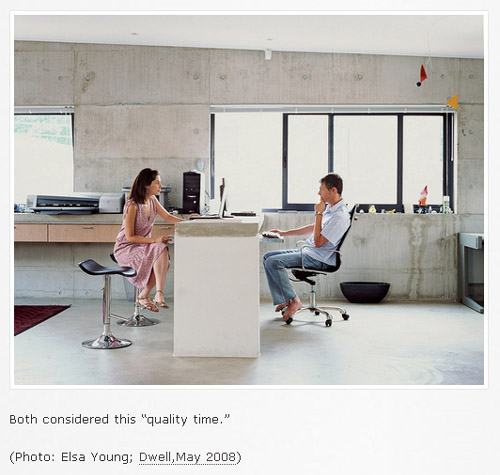
Unless you've been living sans internet for the last few weeks, you've probably seen Unhappy Hipsters. Last week I added a link to the site that features photos from Dwell Magazine with some droll and usually spot-on commentary as a caption. The heavily re-tweeted and e-mailed web page lightly critiques both the architecture, the inhabitants and the means of expression Dwell uses to convey their particular "brand" of neo-modern residential design.

unhappy-hipsters.jpg
[Unhappy Hipsters | image source]

Well, those Unhappy Hipsters make me wonder why a similar blog does not address the out-of-control formalism in architecture today, the because-we-can designs that seem to ignore some of the basic human, environmental and other concerns that architecture should address, all in the name of formal invention. Architectural Record's The First Word blog comes pretty close, but its format of providing a definition and commentary based on a single image is uncritical in its look at new buildings and projects. I think what is needed is something that addresses the things missing in architecture today, because it's so easy to be wooed by pretty pictures -- carefully composed and modified photographs or ever more realistic renderings -- that gloss over a design's shortcomings, especially when they're accompanied by the architect's own words on blogs like Arch Daily. And given that just about all projects today are accompanied by both types of images, it's harder and harder to determine what is successful without being able to visit a building in person.

That said, I figured why not just launch another series on this blog that could tackle such a thing? Yes, I've been slacking on some of the other series (firm faces, especially), but this one sounds like a fun one to tackle. I won't try to replicate the Unhappy Hipster's wit, instead I'll just use architectural imagery as a launching board for commentaries in my usual unexciting tone. Like this:

formique001.jpg
[Kiltro House in Talca, Chile by Supersudaka | image from Arch Daily]

The architects describe how the wooden envelope blocks Chile's hot summer sun, but the roof terrace -- the principal facade when arriving to the house, they also explain -- is completely open to the sun and other elements, any time of year. Accessible but unusable, towards preserving the seamless wrapping of the wood envelope from the entry to the roof and the minimal appearance of this top surface on the approach.

Tuesday, February 09, 2010

Today's archidose #393


Falderstrasse, originally uploaded by schromann.

Apartment building in Köln-Sürth, Germany by Chris Schroeer-Heiermann, 2009.

To contribute your Flickr images for consideration, just:

:: Join and add photos to the archidose pool, and/or
:: Tag your photos archidose

Monday, February 08, 2010

Monday, Monday

My weekly page update:

This week's dose features Concrete Studio in Austin, Texas by Mell Lawrence Architects:
this week's dose

The featured past dose is Bar House in Aspen, Colorado by Peter L. Gluck & Partners, Architects:
featured past dose

This week's book review is Urbanisms: Working with Doubt by Steven Holl:
this week's book review

Some unrelated links for your enjoyment:
ArchiExpo
"The Virtual Architecture Exhibition" (added to sidebar under architectural links::guides)

NYC BigApps
Gallery of the winners and other entries in the competition to develop "a software application...in keeping with New York City's drive to become more transparent, accessbile, and accountable." (via WNYC)

Glass House Twilight Tours
Ever wanted to see Philip Johnson's Glass House at night? Now you can. Tickets are now on sale for 2010 season.

Sunday, February 07, 2010

Today's archidose #392

Here are some photos of Donnybrook Quarter in London, England by Peter Barber Architects, 2006. Photographs are by suburbanslice.

Donnybrook Quarter

Donnybrook Quarter

Donnybrook Quarter

Donnybrook Quarter

To contribute your Flickr images for consideration, just:

:: Join and add photos to the archidose pool, and/or
:: Tag your photos archidose

Friday, February 05, 2010

Half Dose #74: Park Avenue South

The following text and images are courtesy studio octopi for their extension to the Victorian end of a terrace house located in North London, UK. The project is shortlisted for a 2010 AJ Small Project Award.

HD74a.jpg
[photo by Lyndon Douglas Photography]

The original builder was also the house’s first resident, and made the most of his triangular plot by allowing the side of the building to fan out to meet the line of the adjacent public footpath. On the ground floor this resulted in an additional fillet of space splitting the living and dining rooms. It was the divisional nature of this space (used as a utility room) that the client asked studio octopi to resolve. By relocating the utility room, the plan was reordered and paved the way for an extension that linked the living spaces.

HD74b.jpg
[photo by Lyndon Douglas Photography]

The design was developed through a series of folded paper sketch models exploring the nature of the triangular plot, the geometry and aspect. The lines of the roof ridges were drawn out from two points on the rear wall of the house, whilst the elevations extend the lines of the living room and the external rear wall of the kitchen.

HD74c.jpg
[photo by Lyndon Douglas Photography]

The structure is clad entirely in black zinc, with standing seams tracing a path across the roof, emphasising its complex topography and echoing the folds created in the paper concept models.

HD74d.jpg
[photo by Lyndon Douglas Photography]

From a distance, the structure reads as a strong geometric form that has grown out from the back of the house, but at closer quarters, its edges appear to soften and the malleability of the zinc and the very slight billows in its surface come into focus. The impression formed is of a tailored garment turned inside out to reveal a complex structure of pleated seams.

HD74esm.jpg
[drawing by studio octopi | click image for expanded view with key]

HD74fsm.jpg
[drawing by studio octopi | click image for expanded view with key and more sections]

Internally, the smooth planes and sharp facets of the ceiling recall an origami paper lantern, neatly folded and then popped up into three dimensions to form a bright lining to the dark fabric over-garment. Seemingly in constant motion, the planes shift and tilt, alternating with triangular roof lights that frame views of the sky, trees and distant chimney-tops.

HD74g.jpg
[photo by Lyndon Douglas Photography]

A cantilevered island unit clad in seamless black granite delineates the kitchen from the living space. Bridging the step down to the kitchen it creates on one side a working surface at waist height, and a seating area on the other. This monumental feature is echoed in the granite terraces that lead out into the garden. These are the first elements of the planned landscaping, with areas of paving and planting that will reflect the form of the structure’s openings like patches of light cast by the paper lantern.

HD74h.jpg
[photo by Lyndon Douglas Photography]